

Primary Care Surveyors

Tia

Uncategorized

Primary Care Property in 2024 – A Year in Review

Primary Care Property in 2024 | Primary Care Surveyors From new property developments breaking ground to shifting market conditions and evolving healthcare legislation, the year has kept us busy and tested our expertise in navigating an ever-changing landscape. New Property Developments One of the standout achievements this year has been the construction of three new primary care properties, which are nearing completion. These projects, while incredibly rewarding, are a rarity in the current market. Two of these developments have been in the pipeline for nearly 20 years, and seeing them finally progress to construction has been a significant milestone—not just for us, but for the healthcare communities they will serve. However, the broader picture of new primary care property developments is far more challenging. Rising construction costs, higher interest rates, and the difficulty of achieving viable rental levels make it increasingly hard to get primary care property projects off the ground. While new premises bring much-needed modernisation to primary care, they also highlight disparities in rent levels for existing properties. The Rise of Rent Disputes One of the most significant trends we’ve observed this year is the sharp rise in rent disputes. With rents for new premises increasing to reflect construction costs and market conditions, many existing premises are undergoing rent reviews that are proving contentious, with landlords seeking rent for existing premises being more closely aligned to the level of rent being achieved for new properties. Dispute resolution work has become a cornerstone of our activity this year, as we help healthcare practices navigate complex negotiations and achieve fair outcomes. The recently introduced Premises Directions, which took effect in May, have added new layers of complexity to the rent review process for leased premises. While there are some positives—such as clearer guidance and increased improvement grant funding—the changes have also created additional hurdles for practices and landlords alike. An Active Investment Market In a surprising turn, the healthcare property investment market has shown notable activity this year. Following the volatility of rising interest rates from mid-2022 onwards, the market has adjusted to a new level of stability. This adjustment has reignited investor confidence, with healthcare properties proving to be a resilient and attractive asset class. At Primary Care Surveyors, we’ve had a particularly active year in this space. With two medical centre investments under offer and a third set to go to auction in December, we’ve seen more transactional activity than ever before. This trend is encouraging, as it demonstrates the continued appeal of healthcare properties, even in challenging economic conditions. Lease Consultancy and Ownership Trends The evolving landscape of GP partnerships has also driven increased demand for lease consultancy services. We’ve noticed a growing trend of retiring partners retaining ownership of GP premises and leasing them to continuing partners. This separation of ownership and occupation is creating a new layer of complexity in lease agreements, requiring careful negotiation to ensure fairness and clarity for all parties involved. 2024 Legislation and Political Landscape The release of the new Premises Directions in May brought with it both challenges and opportunities. While the increased funding for improvement grants is a positive step, the adjustments to rent review processes have added complexity for many practices. Politically, the year has been marked by the anticipation of change following the election. Early promises of increased NHS investment raised hopes, but as the year draws to a close, there’s been little concrete action to support GP premises or infrastructure. We remain cautiously optimistic for meaningful developments in 2025, though there’s a growing sense of trepidation that much-needed reforms may stall. Looking Ahead to 2025 As we step into the new year, a key question looms: will the government take bold action to address the critical need for healthcare infrastructure? If the vision for moving services from secondary care into the community is to become a reality, significant changes are required. These include revisiting the rent level mechanisms to make new premises viable and encouraging NHS bodies to move away from reliance on the District Valuer in favour of commercial surveyors. Without these changes, the primary care property sector risks stagnation at a time when innovation and investment are desperately needed. Final Thoughts 2024 has been a year of progress, challenges, and opportunities. At Primary Care Surveyors, we’re proud to have supported our clients through complex negotiations, legislative changes, and market shifts. As we look to 2025, we remain committed to advocating for the changes needed to ensure primary care properties can continue to meet the needs of healthcare practitioners, patients, and investors alike. Here’s to another year of navigating the complexities of the healthcare property sector and making a tangible difference for our clients and communities. Contact Let’s Talk About Your Premises Call us to discuss how we can support your practice’s property needs Let’s Talk

Uncategorized

New NHS Premises Cost Directions 2024

New NHS Premises Cost Directions 2024 Key Changes and Updates: 1. District Valuer Alternative: Whilst the Directions make reference to the District Valuer, this can now be an alternative appointed valuer so this does give scope for NHS England or ICBs to appoint a valuer of their choosing. 2. Improvement Works Enhancement: Improvement works have been substantially amended with it now being possible to secure an improvement grant of up to 100% of the cost. The period of the abatement has been revised with the maximum abatement period now being 18 years. 3. Recovery Provisions: The Directions now make scope that where there is an improvement grant NHS England can seek recovery of this if the property is no longer used as a surgery for the minimum guaranteed period of use. 4. Land and Premises Purchase: Improvement grants can now be used to fund the purchase of land and/or premises to provide primary care services. 5. Car Parking Modifications: Car parking arrangements have been slightly modified. The new Directions now allow NHS England to consider the funding of such car parking spaces where previous restrictions are inappropriate. 6. Environmental Impact Works: Works to reduce environmental impact can now be subject to funding if the contractor can satisfy NHS England that those improvements provide a net financial benefit to the Health Service. 7. Stamp Duty Reimbursement: Where practices are purchasing land, it is now possible for the GP practice to request reimbursement of stamp duty land tax (SDLT) on acquiring land or premises. 8. PFI and LIFT References: There is now reference to PFI and LIFT, which is perhaps slightly unusual given the historical context. 9. Top-up Rents Expansion: Under the previous Directions, top-up rents were meant to be limited to areas of deprivation. The reference to deprivation has now been removed, resulting in top-up rents likely to be the way that new premises are to be funded. 10. Rent Review Process: A major change is that when NHS England (or ICB) notify the practice of the proposed Current Market Rent/Notional Rent (CMR6 or CMR4 letters) that this must be responded to within 12 weeks. 11. VAT Considerations: When taking a new lease, practices are to seek an undertaking from the landlord not to waive the exemption to VAT. Conclusion Overall, the new Directions have tidied up some anomalies that were from the previous Directions and have improved matters when it comes to improvement grants both in terms of the quantum of the improvement grant but also what the improvement grant may be used for. The rent review process is now given greater clarity, or at least for notional rent (when practices own their surgery) notably the 12 week deadline to respond to the CMR4 or CMR6 letter as issued by the ICB. I was surprised there were certain omissions, notably that there is no reference to Energy Performance Certificates (EPCs) but this may be consistent, if outdated, in that works to improve the environmental performance of the property are still to be excluded from funding. Whilst the Directions may be clear on the rent review process and the process for approving new leases for premises, no specific mention is made of the lease renewal process. Adam Thompson Contact Let’s Talk About Your Premises Call us to discuss how we can support your practice’s property needs Let’s Talk

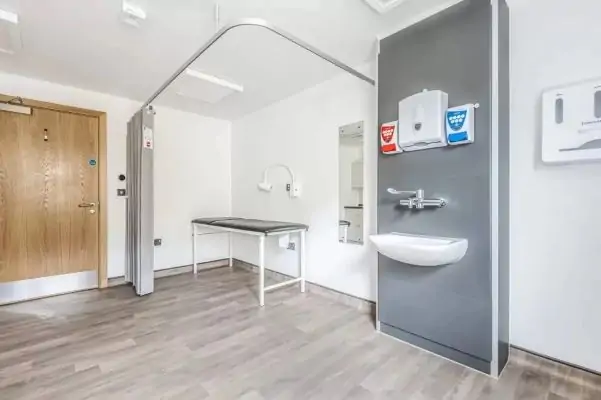
Modern medical consultation room
Uncategorized

New Medical Centres

New Medical Centres Transforming UK Primary Care Amid Rising Construction Costs Over the past twelve months, the landscape of UK primary care has seen significant expansion, with the opening of several new medical centres across the country. As a primary care surveyor with insight into the evolving healthcare infrastructure, it’s clear that the new surgeries in Winchester, Shirley, Worthing, and Bognor are not only responding to increased demand for services but also aligning with the government’s drive to improve access to GP care. These state-of-the-art medical centres are designed to address both patient needs and the operational challenges faced by GPs, offering modern amenities and capacity to accommodate growing populations. This expansion reflects a positive shift towards more accessible, patient-centred healthcare, particularly in areas where demand has outstripped existing provision.  The Surge of New Medical Centres Across the UK The development of new medical centres amidst rising construction costs, is becoming increasingly vital due to the growing demand for healthcare services in the UK. This surge in demand is largely driven by population growth, particularly within the Asian community, and the evolving needs of patients. As the healthcare system shifts towards more community-based care, with services transitioning from secondary (hospital) care to primary care settings, it’s essential to have the right primary care infrastructure in place. However, significant challenges stand in the way of developing new medical centres, primarily due to the sharp increase in rising construction costs and rising interest rates. These factors have led to a situation where the rent required for new medical centres to remain financially viable has risen dramatically, often surpassing £300 per square metre.  This substantial rise in construction costs has made it increasingly difficult to bring new healthcare facilities to life, as the district valuer—who assesses the financial viability of healthcare development projects—has not adjusted to these heightened rental levels. Consequently, many potential projects are facing financial barriers. There is growing anticipation that a change in government or policy emphasis could help resolve these issues. While there have been encouraging discussions around transforming UK primary care, particularly in terms of shifting services from hospitals to the community, concrete actions and funding are still awaited.  The government has recognised the underinvestment in primary care estates, with reports highlighting the urgent need for substantial government funding for healthcare to drive transformational change. As we approach 2025, there is hope that a shift in government priorities could pave the way for the necessary investments and policy reforms needed to develop modern medical centres. These new medical centres would be better equipped to meet the increasing demand for healthcare services and support the transition to community-based care. For UK primary care to thrive, robust financial backing and strategic planning will be essential in overcoming the current barriers to new medical centre development as well as adjustments to the infrastructure to help stop the rising construction costs.  The Involvement of Primary Care Surveyors in New Medical Centre Developments Primary Care Surveyors have played a pivotal role in the development of new medical centres across the UK, contributing their expertise to several long-term projects in Winchester, Shirley, Worthing, and Bognor Regis. Their involvement has been instrumental in ensuring these projects meet the evolving needs of the communities they serve.  In Winchester, Primary Care Surveyors were appointed as Development & Monitoring Surveyor in 2019. The project involved the transformation of a 1960s office building into a modern, three-storey surgery complete with a car park. This ambitious conversion was carried out in collaboration with Assura, one of the UK’s leading healthcare development corporations. The result is a state-of-the-art facility that significantly enhances healthcare access for the local population.  Similarly, in Bognor Regis, Primary Care Surveyors have been involved since 2006, working alongside renowned firms such as Simpson Hilder Associates Architects and Chawton Hill Quantity Surveyors. This project, like the one in Winchester, has now reached completion, providing the community with a much-needed modern medical centre.  These projects exemplify the critical role that Primary Care Surveyors play in the development of healthcare infrastructure. As the UK continues to invest in its primary care infrastructure, the involvement of skilled healthcare surveyors will remain essential in driving forward the transformation of primary care services. Adam Thompson Director

Business professionals shaking hands
Uncategorized

GP Partnership Changes

GP Partnership Changes GP Surgery Valuation and Partnership Review: What Every GP Partner Needs to Know As specialist surveyors in the primary care sector, we are frequently instructed to advise on changes in GP partnerships. Most commonly, this involves providing a GP surgery valuation when a GP partner is joining or leaving a practice. This is particularly relevant when the premises are owned as a partnership asset and therefore form part of the overall GP partnership arrangements.  In other cases, where the surgery premises are leased rather than owned, we are often instructed to advise an incoming GP partner on the lease terms as part of a wider GP partnership review. In both scenarios, early engagement with professional advisers is essential to ensure a smooth transition and accurate reflection of the partnership’s property interests.  For property-owning partnerships, the GP partnership review typically begins with a thorough examination of the existing partnership agreement. These documents usually stipulate the timeframe within which an outgoing GP partner must be bought out and, conversely, the period allowed for a new partner to buy in. It is important to ensure that the agreement includes clear provisions regarding the treatment of premises and sets out how the GP surgery valuation should be approached.  Such clauses will normally refer to ‘market value’ and may also include instructions on the basis of valuation, whether the valuer is to assume continued use as a surgery or consider alternative uses. For instance, if the building was originally a residential property converted to a surgery, it may be appropriate for the valuer to consider reinstatement to residential use. On the other hand, for purpose-built medical centres, a restriction to healthcare use is generally more fitting. Nonetheless, even purpose-built surgeries can become obsolete, and the suitability of the premises for continued use should be assessed critically.  To address these matters, solicitors and surveyors should collaborate to draft appropriate wording in the partnership agreement. Increasingly, agreements specify that the valuer is to consider the current notional rent and its likely continuation. This approach prompts the valuer to assess whether the building remains fit for use by a primary care provider. In conducting the GP surgery valuation, the valuer will evaluate the general quality of the premises, the strength of local demand, the viability of list dispersal, and the likelihood of NHS approval for continued use by another practice.  In some instances, relocation to a new surgery may be contemplated. However, the development of new premises is rarely quick or straightforward. As such, the valuer may need to assume that the existing premises will continue to provide healthcare for a period (commonly five to ten years) after which redevelopment or alternative use may be more realistic. This leads to a hybrid valuation model, where a period of notional rent is assumed, followed by a residual valuation based on the site’s future potential.  Another key consideration is whether the premises are assumed to be vacant or subject to a lease. The existence of a lease can significantly affect the GP surgery valuation, often leading to a higher reported value. However, care must be taken to avoid artificially inflated valuations based on hypothetical leasing arrangements. The Royal Institution of Chartered Surveyors has addressed this in its Valuation of Medical Centres Guidance Note, which we strongly recommend all valuers consult before undertaking a GP partnership review. Further information can be provided at www.rics.org.  The impact of rent reviews must also be considered. Notional rents are reviewed triennially, and it is not uncommon for a review to be outstanding at the time of valuation. This does not preclude a valuation being undertaken. Instead, the valuer must take a view on the likely outcome and incorporate any potential uplift into the assessment. This provides greater confidence in the accuracy of the GP surgery valuation, even where a rent review is unresolved.  For practices welcoming a new GP partner, we recommend using a formal new GP partner checklist to ensure all legal, financial, and property considerations are addressed. This checklist should include a review of the partnership agreement, assessment of property arrangements, lease or ownership status, and clarity on how future valuations and contributions are to be handled.  If you would like to discuss a GP partnership review, require a GP surgery valuation, or need support creating a new GP partner checklist, please do get in touch. Adam Thompson Director Contact Let’s Talk About Your Premises Call us to discuss how we can support your practice’s property needs Let’s Talk

Scroll to Top
PCS company logo design
Privacy Overview

This website uses cookies so that we can provide you with the best user experience possible. Cookie information is stored in your browser and performs functions such as recognising you when you return to our website and helping our team to understand which sections of the website you find most interesting and useful.